ANNUAL PLAN EVALUATION REPORT (2025–26)
1. Executive Overview
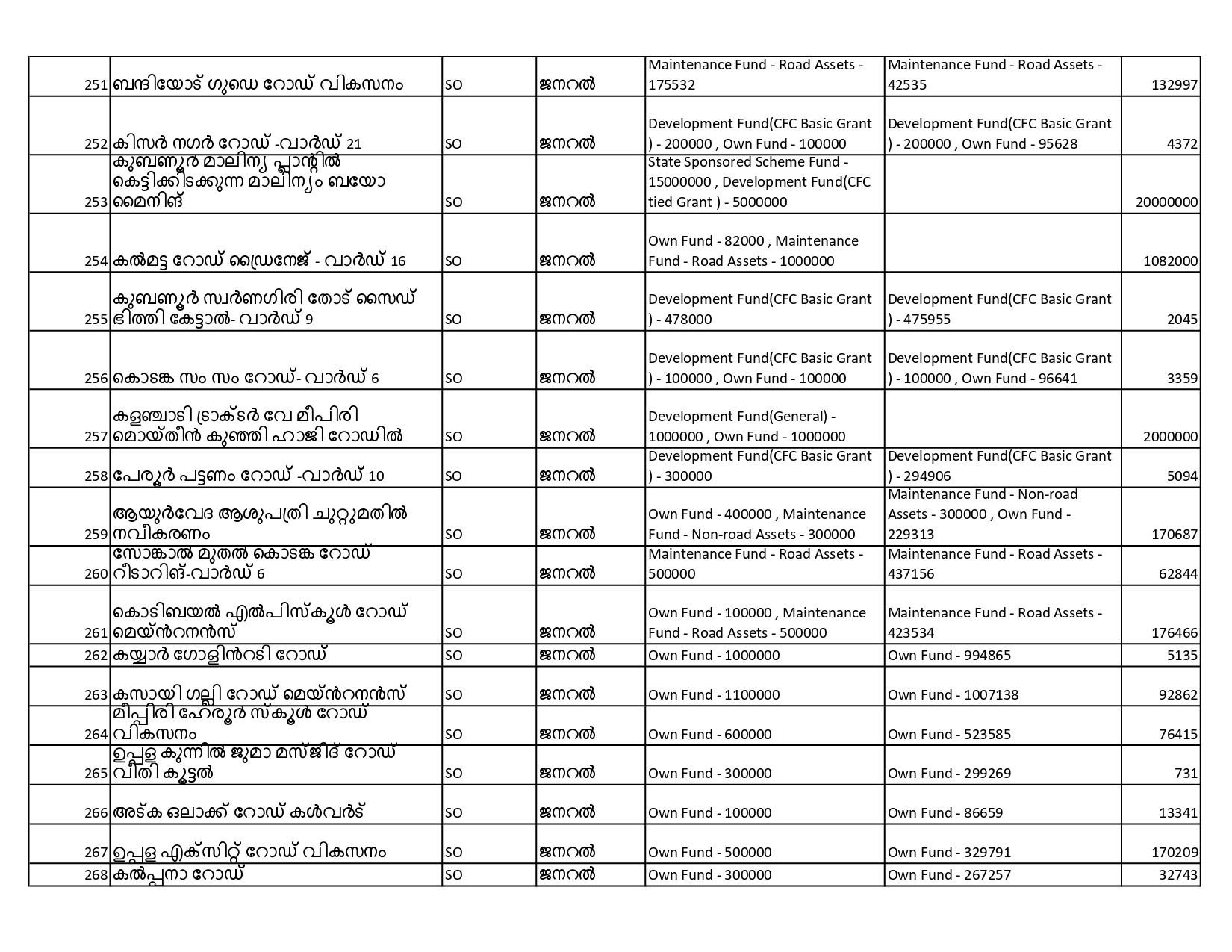
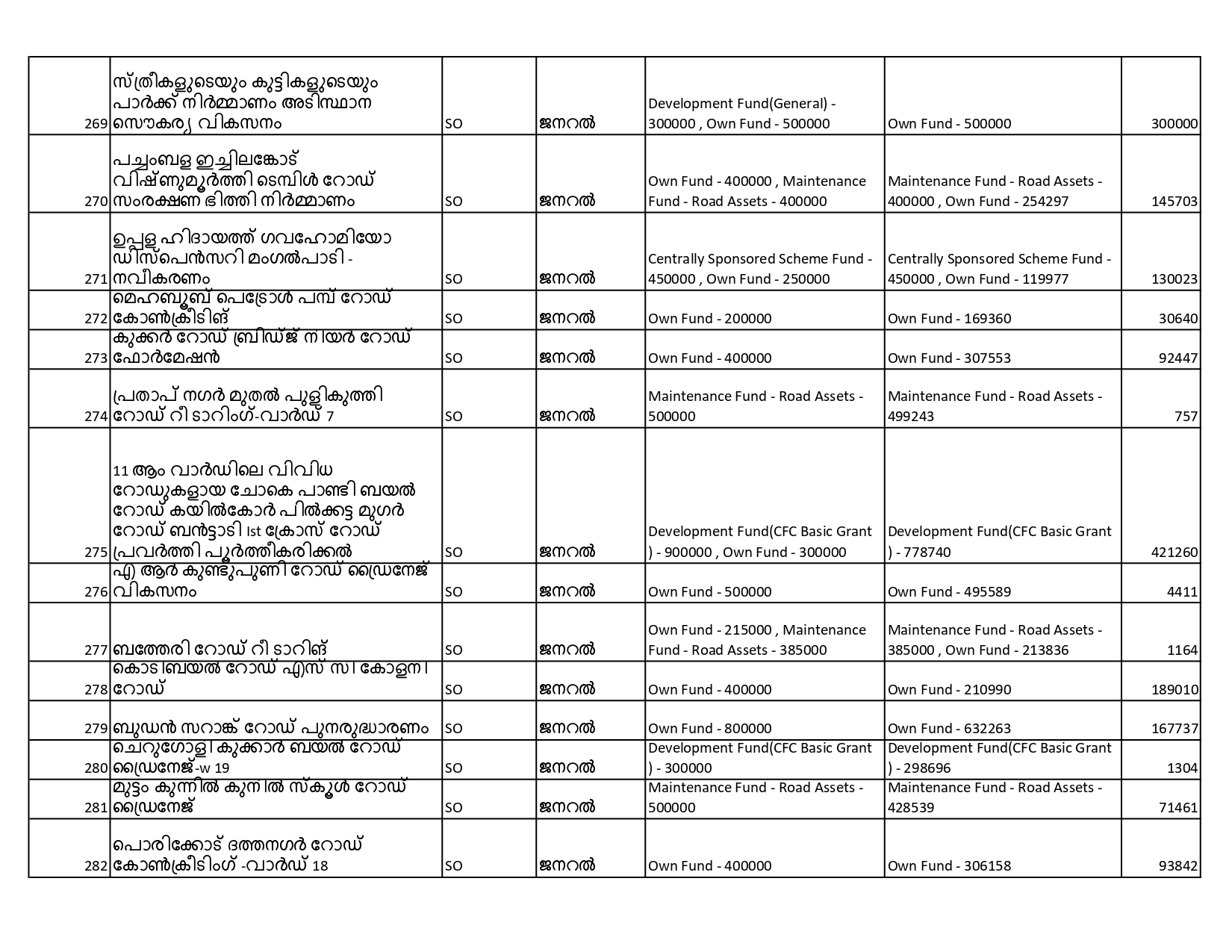
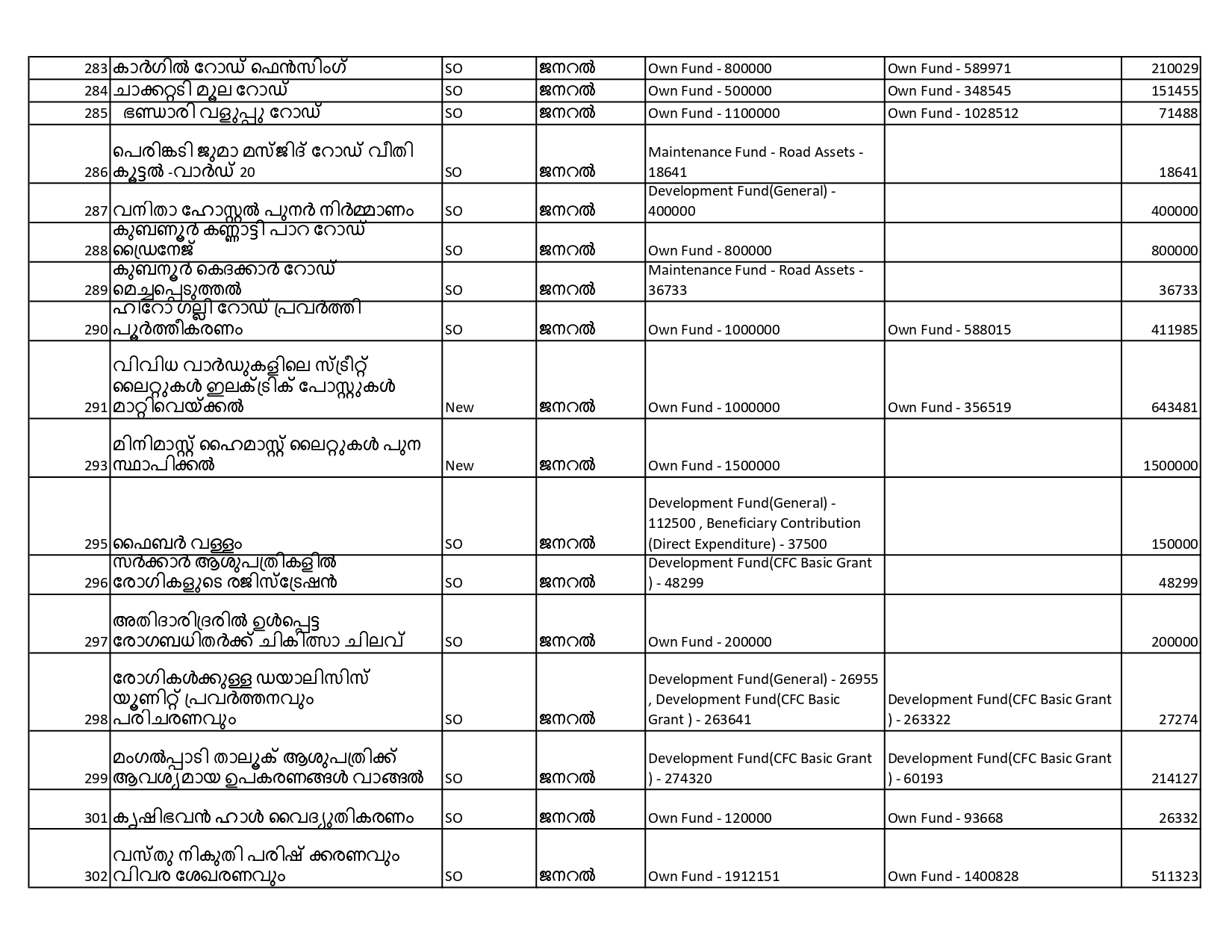
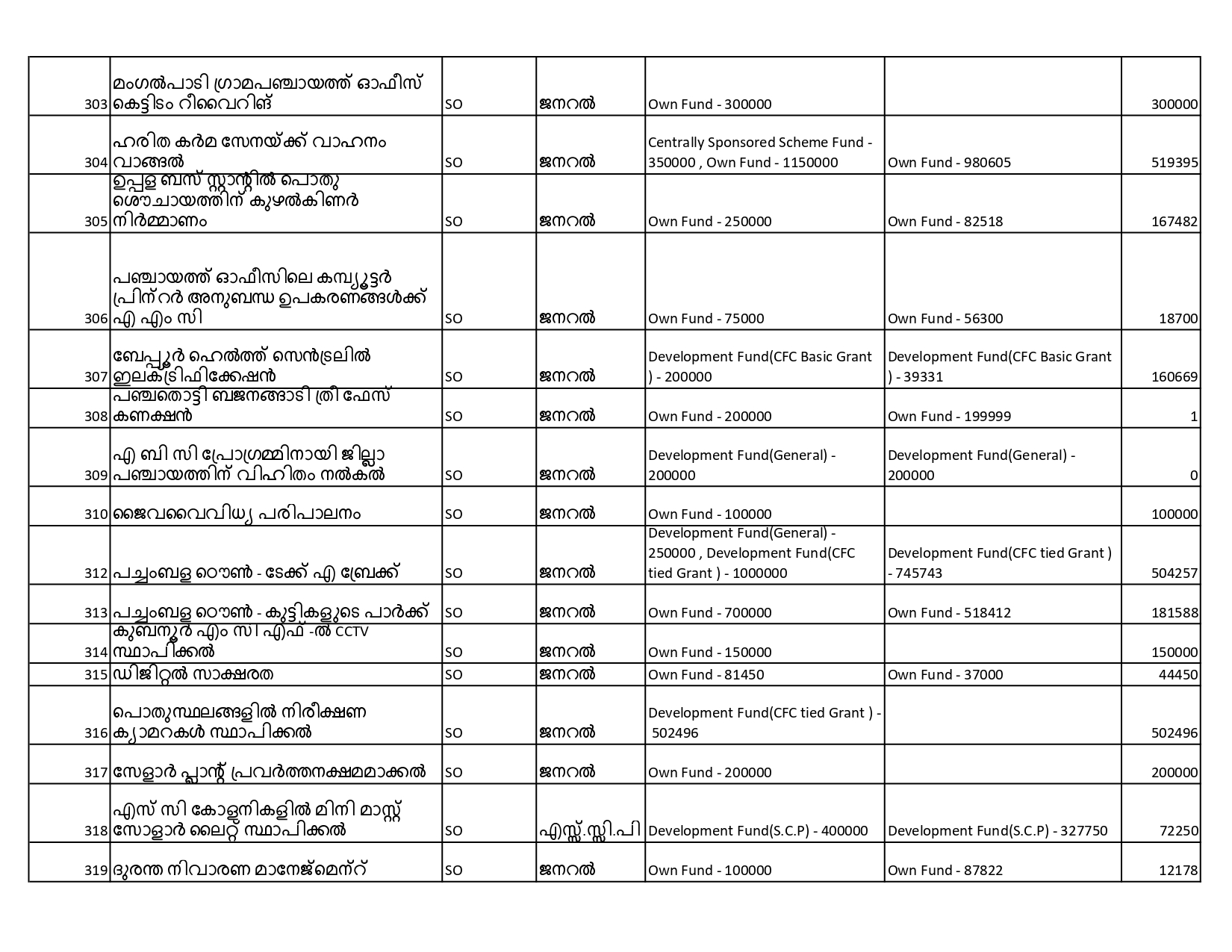
The Mangalpady Grama Panchayat Annual Plan for the fiscal year 2025–26 details a structured developmental framework aimed at socio-economic uplifting, robust local infrastructure development, environmental sustainability, and targeted poverty alleviation. The plan transitions from foundational administrative framework budgeting to grassroots implementation across multiple focus sectors.
The plan demonstrates a clear strategy focused on maximizing fund absorption while attempting to lower unspent fund surpluses (balances) across crucial heads of development.
2. Comprehensive Sectoral Breakdown & Highlights
A. Agricultural & Allied Primary Sectors
The panchayat emphasizes traditional cultivation revitalisation alongside modern tech-driven additions:
- Paddy Cultivation Support (Project 5): Financial backing focused heavily on labor-cost subsidies with an approved fund allocation of ₹1,000,000, achieving an operational expenditure of ₹535,800.
- Coconut and Arecanut Development (Projects 6 & 7): Comprehensive schemes combining large inputs from the Development Fund (General) and direct Beneficiary Contributions. For instance, Project 6 (Coconut Cultivation) effectively deployed ₹1,288,645 of its general allocation.
- Alternative Farming (Project 8): Initiated backyard and localized vegetable container/pot distribution utilizing a total funding model of ₹1,000,000.
B. Fishermen Welfare & Allied Interventions
Given its coastal alignment, specific targeted welfare schemes were executed using the Panchayat’s Own Funds and general pools:
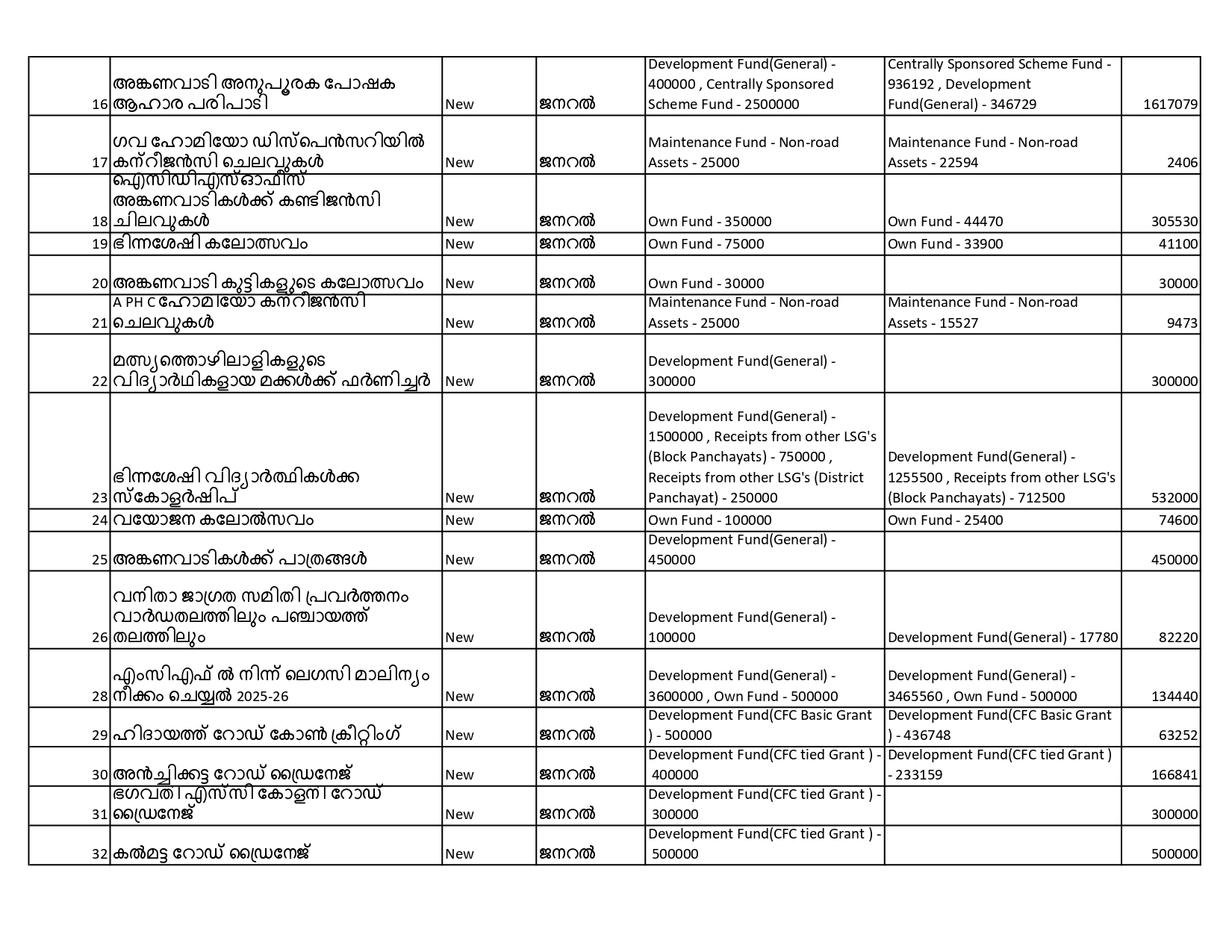
- Technological Empowerment (Project 13): Distribution of laptops to students belonging to traditional fishing families with a near-total expenditure deployment (₹225,000 allocated and completely utilized).
- Logistics & Storage Support (Project 14): Specialized water tank distribution program valued at ₹80,000 to improve storage conditions for fishing households.
C. Public Health, Sanitation & Marginalized Welfare
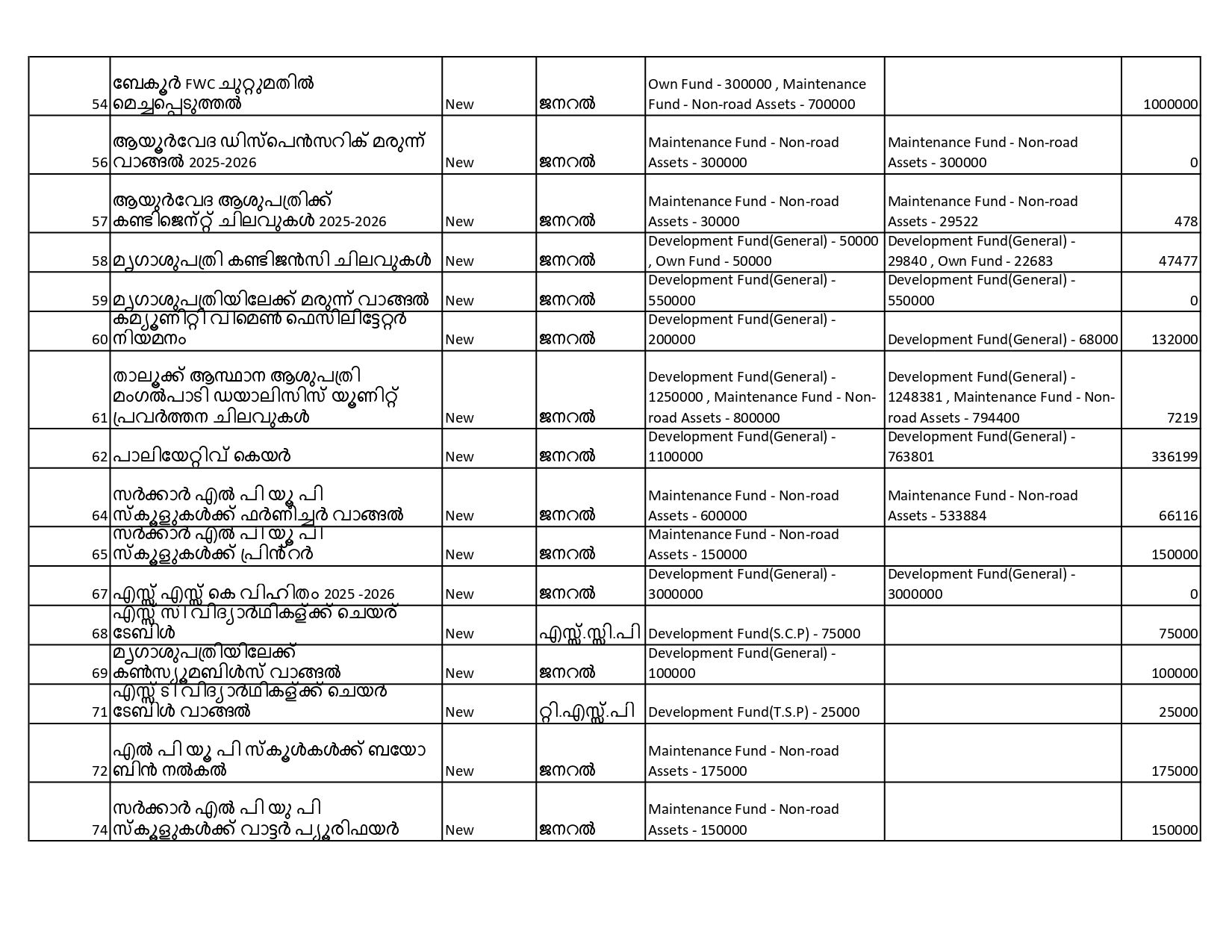
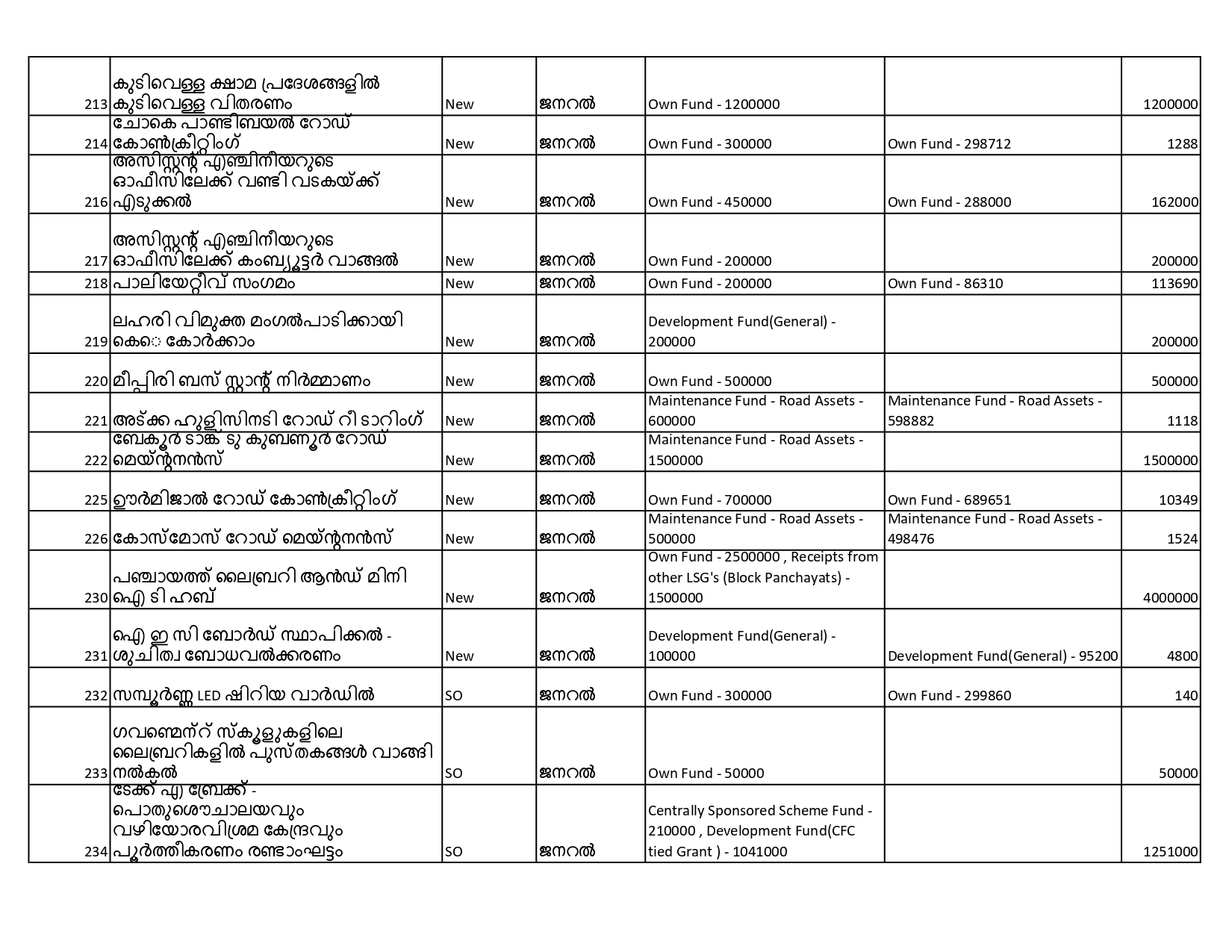
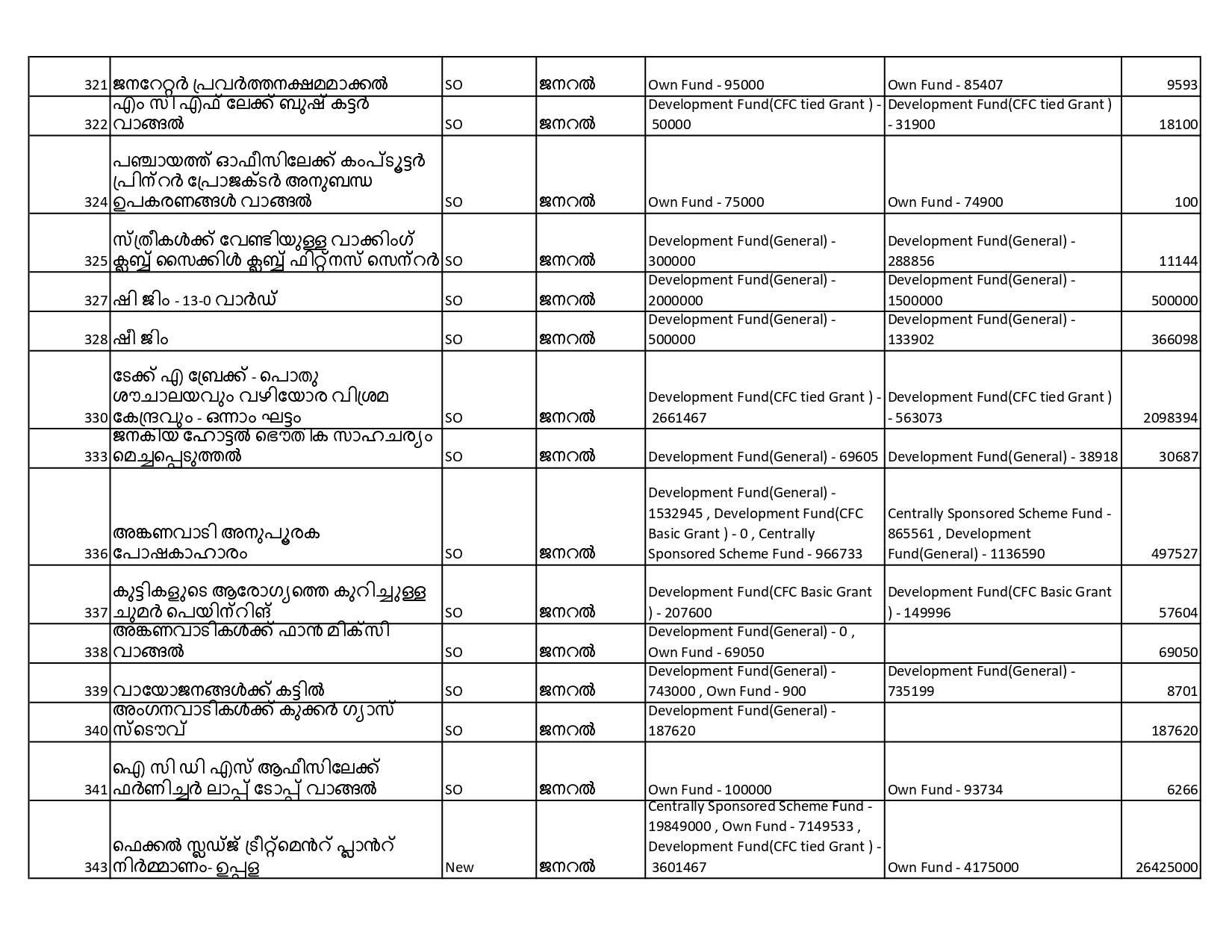
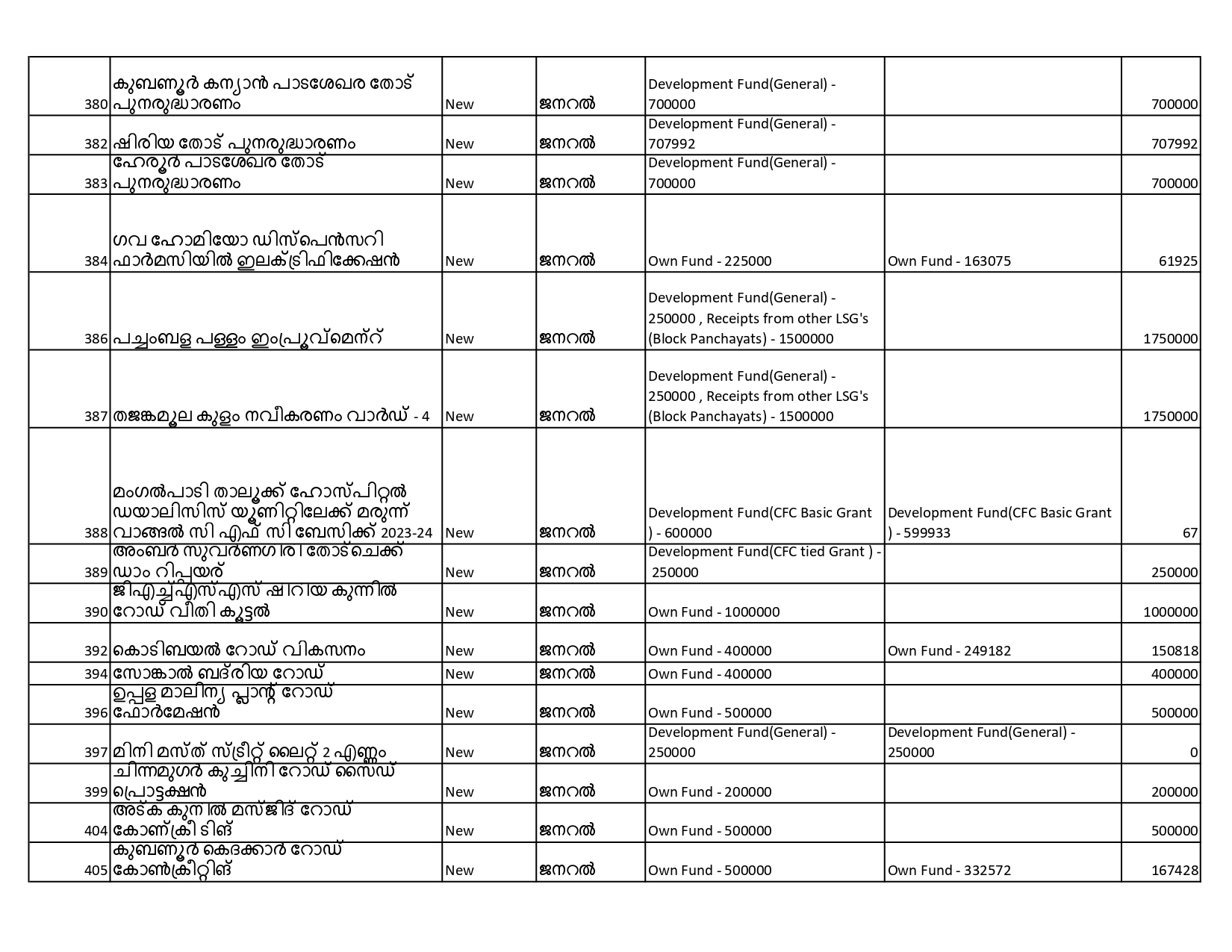
- Local Healthcare Infrastructure (Projects 11, 12, 17 & 61): Substantial funding was designated to operationalize and stock medical provisions for the Government Homeo Dispensary (₹100,000 for medicine purchase) and the prominent Mangalpady Dialysis Unit at the Taluk Headquarters Hospital. The Dialysis unit absorbed a massive combined allocation of ₹1,250,000 from the Development Fund and ₹800,000 via Maintenance Funds.
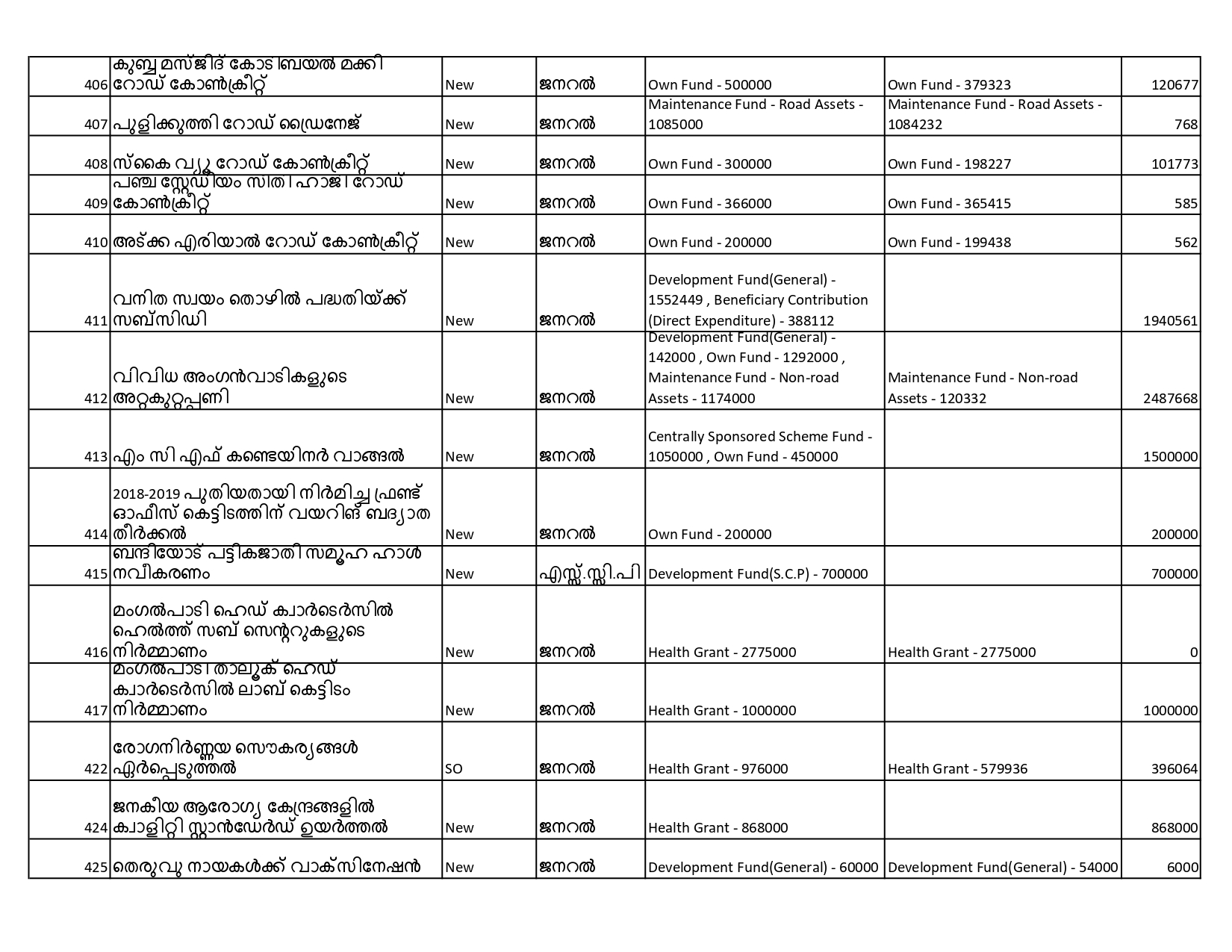
- Solid Waste and Environmental Management (Project 28): Executed a highly critical legacy waste removal and management project from the local Material Collection Facility (MCF). It successfully spent ₹3,465,560 out of its ₹3,600,000 general plan allocation, backed by an additional ₹500,000 from Own Funds.
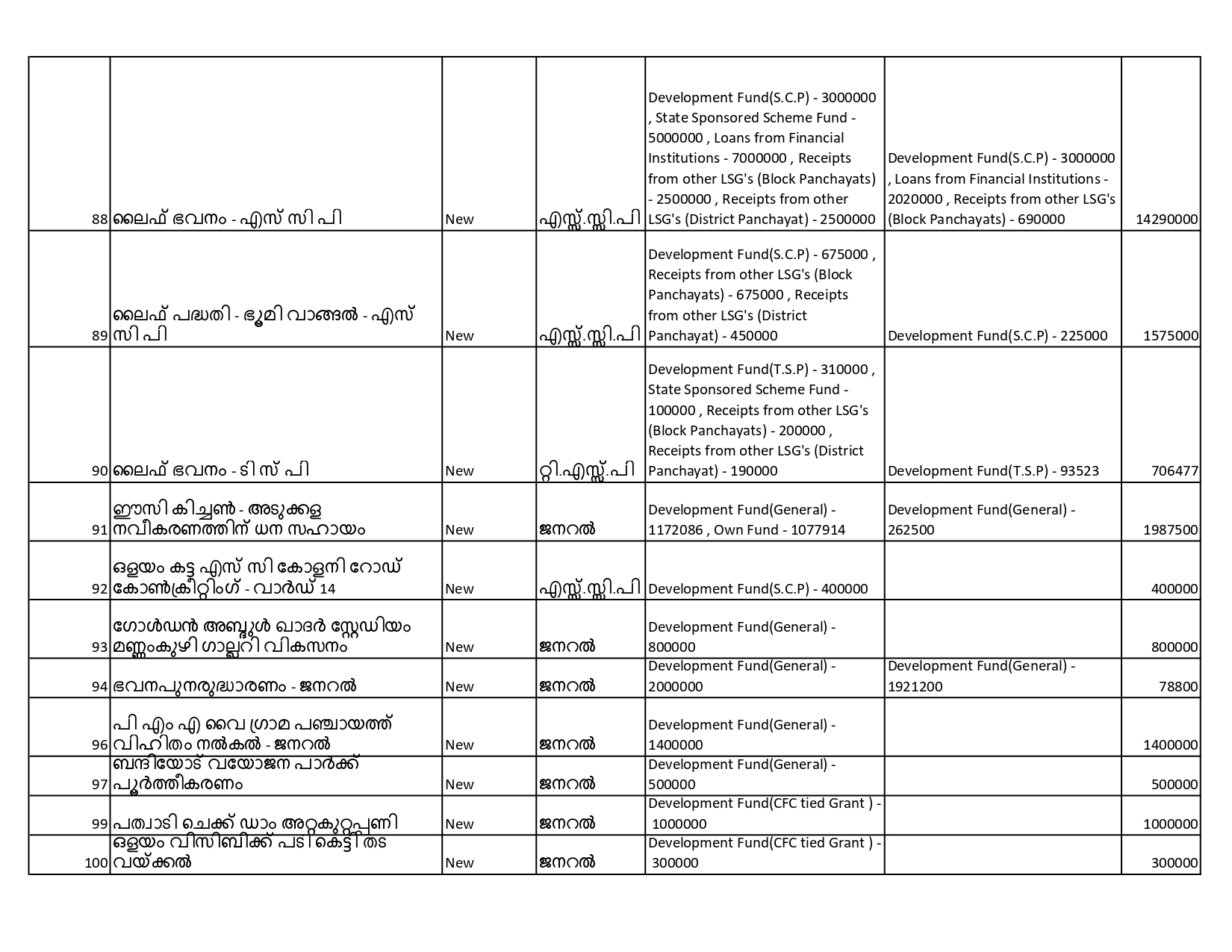
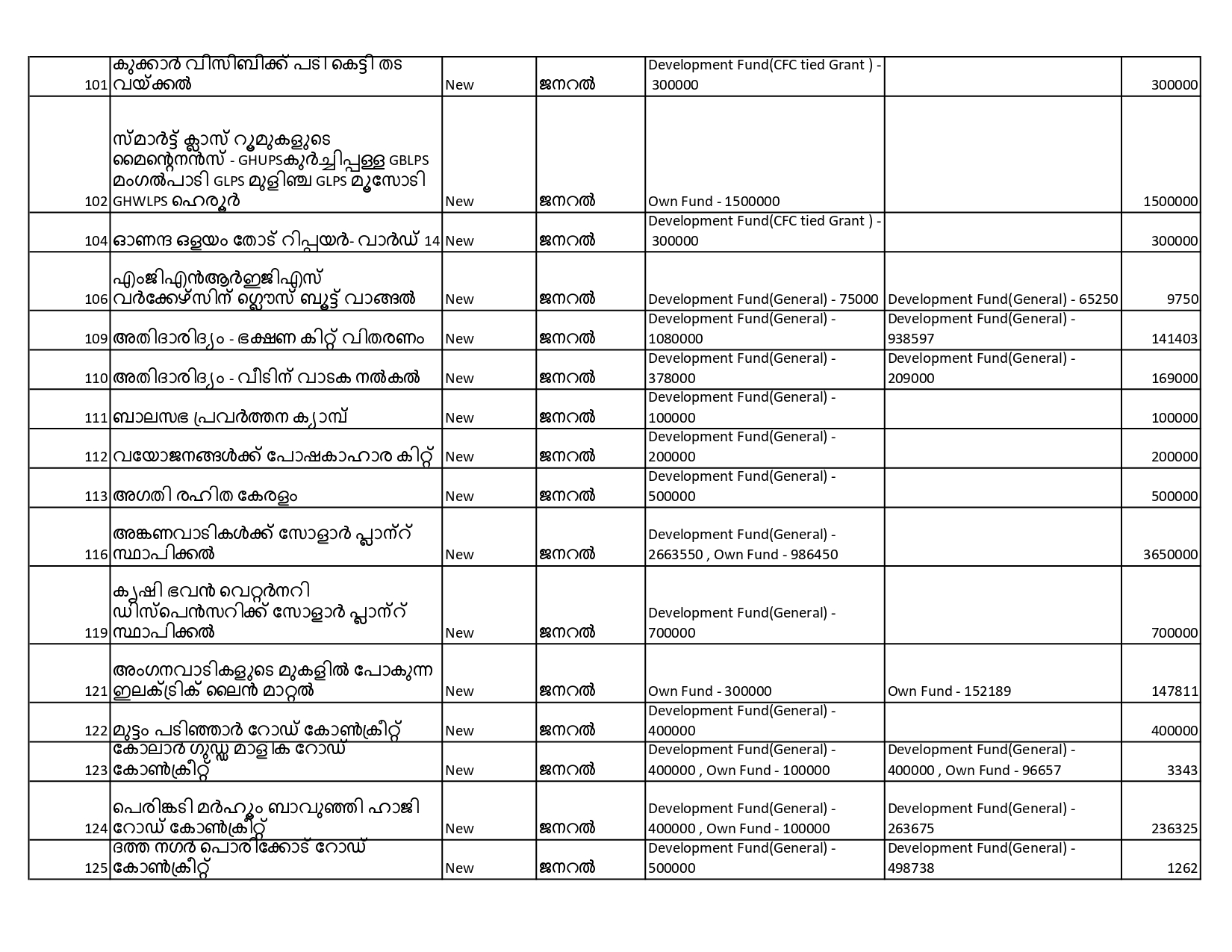
- Extreme Poverty Alleviation (Projects 109 & 110): Addressed under the Athidharidryam (Extreme Poverty) eradication banner. Dedicated efforts included direct distribution of food kits (spending ₹938,597) and rental housing assistance programs for the destitute.
D. Infrastructure, Connectivity & Drainage Networks
A major share of Central Finance Commission (CFC) Grants (both Basic and Tied) was systematically diverted into civic infrastructure improvements:
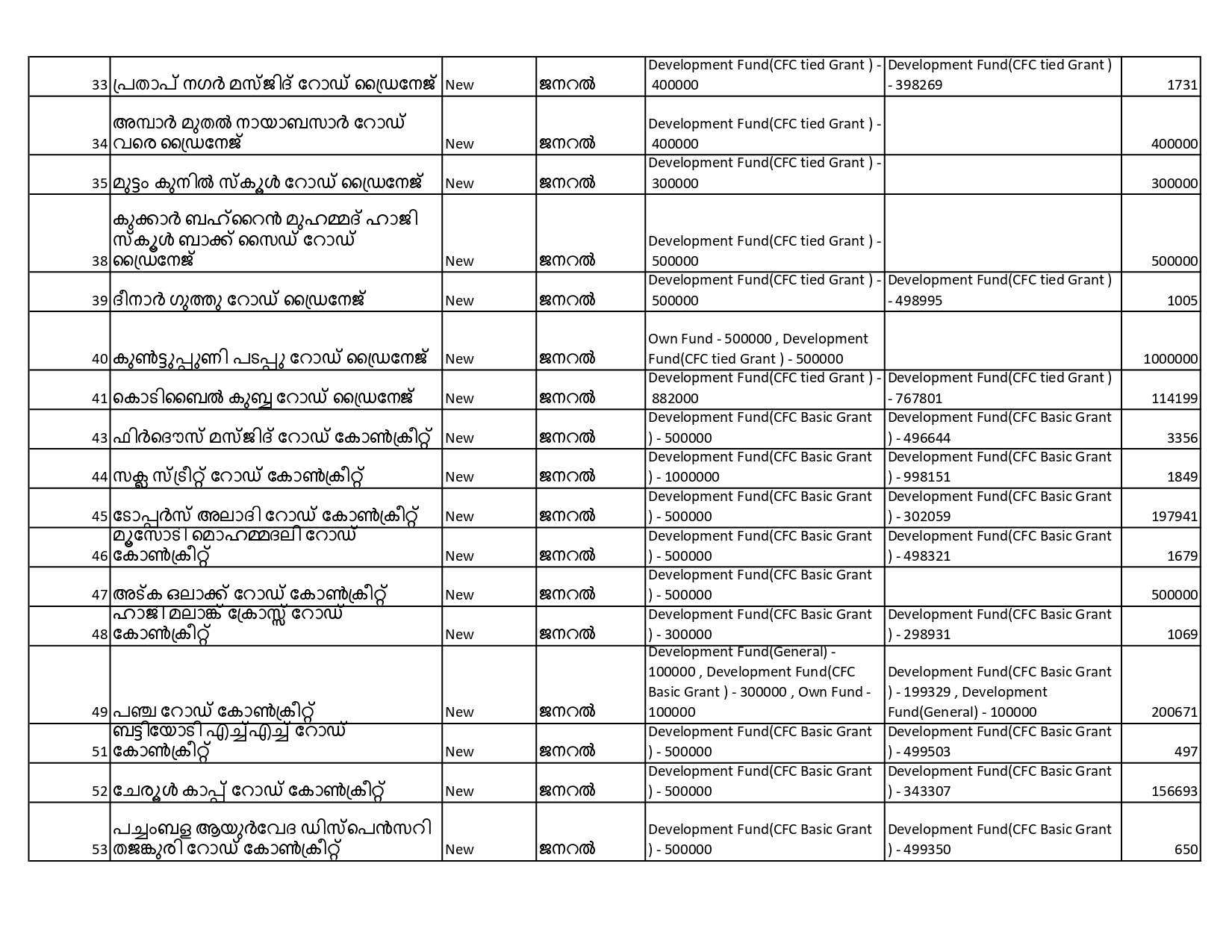
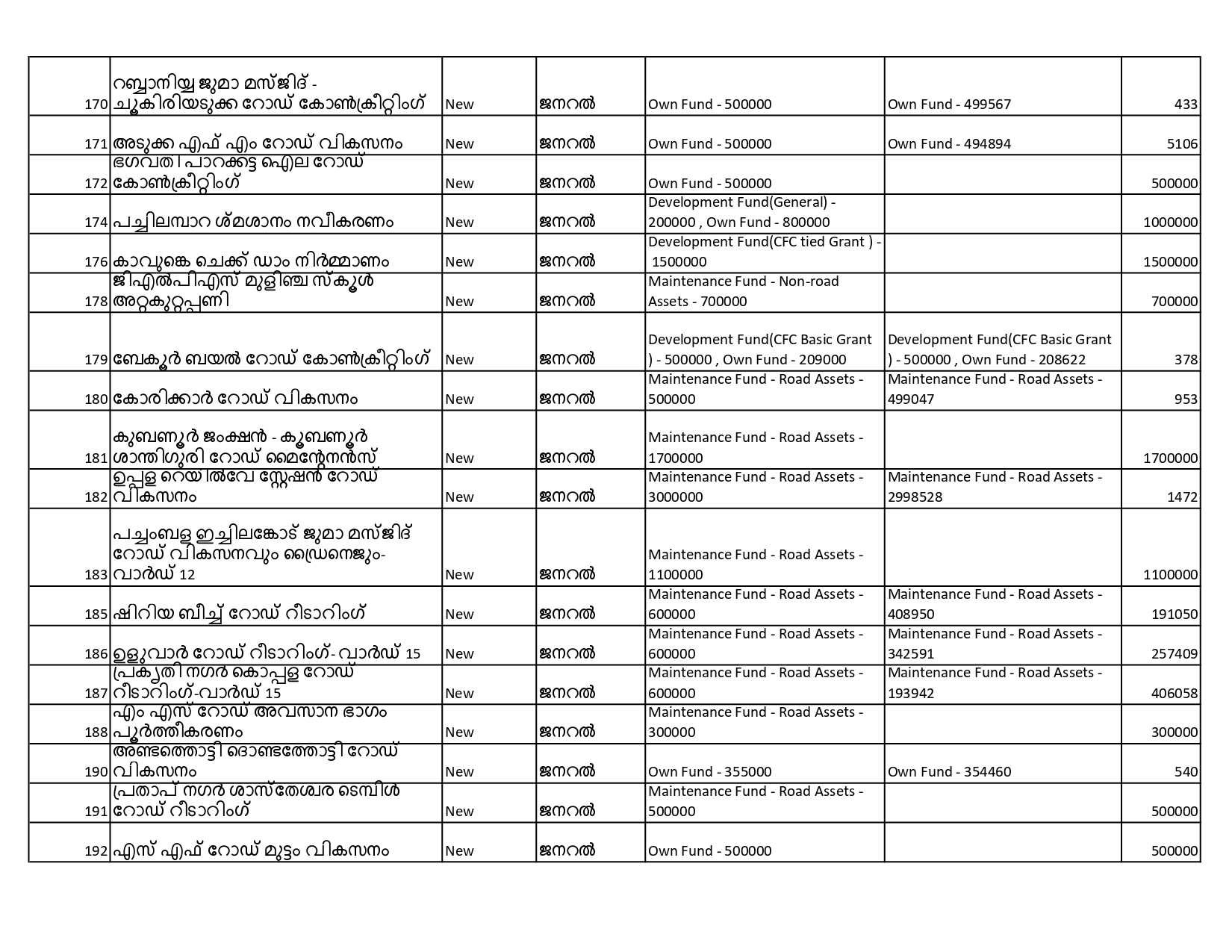
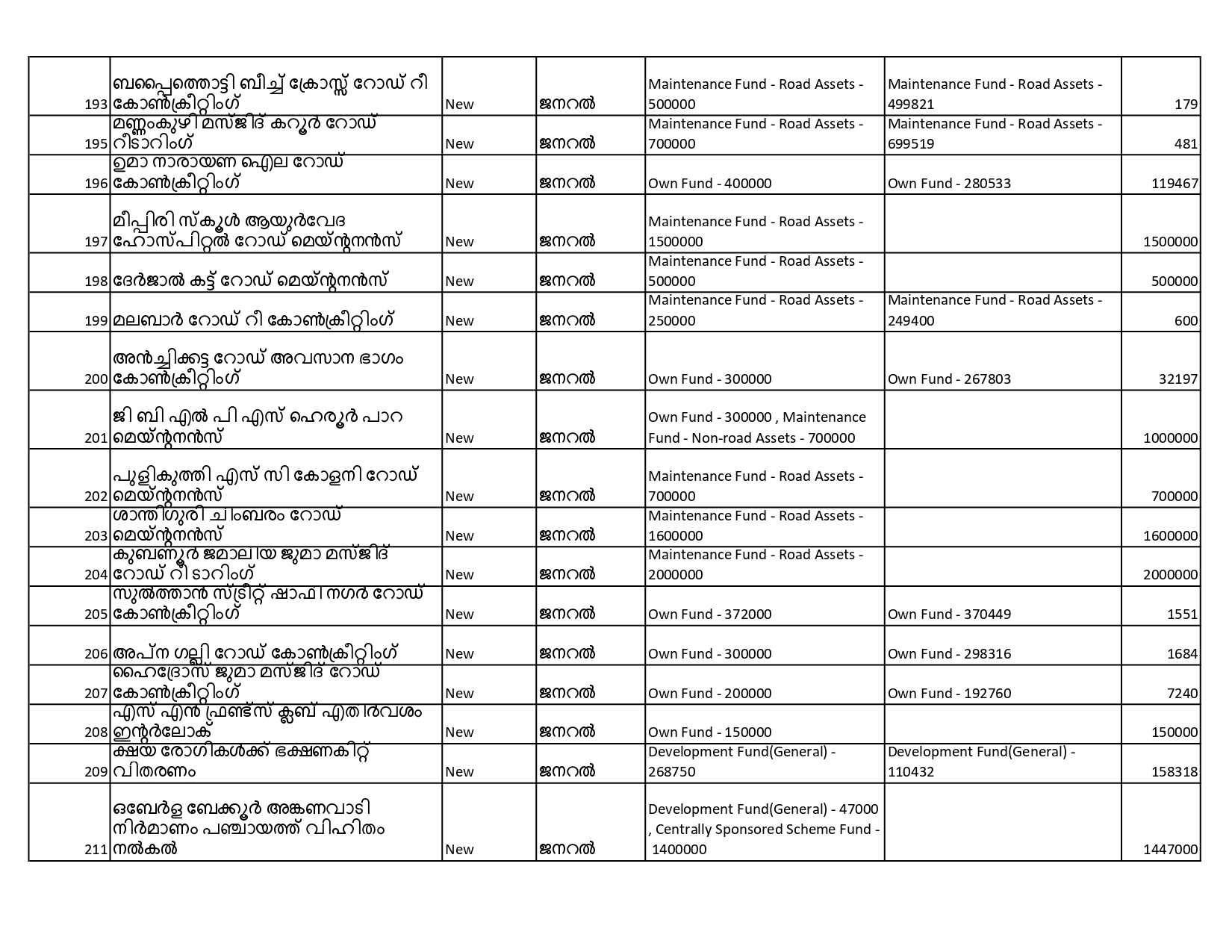
- Drainage Systems: Targeted drainage installations along high-density local paths including Anchikatta Road, Kalmatta Road, Pratap Nagar Masjid Road, and Ambar to Naya Bazar road segments to resolve seasonal water-logging.
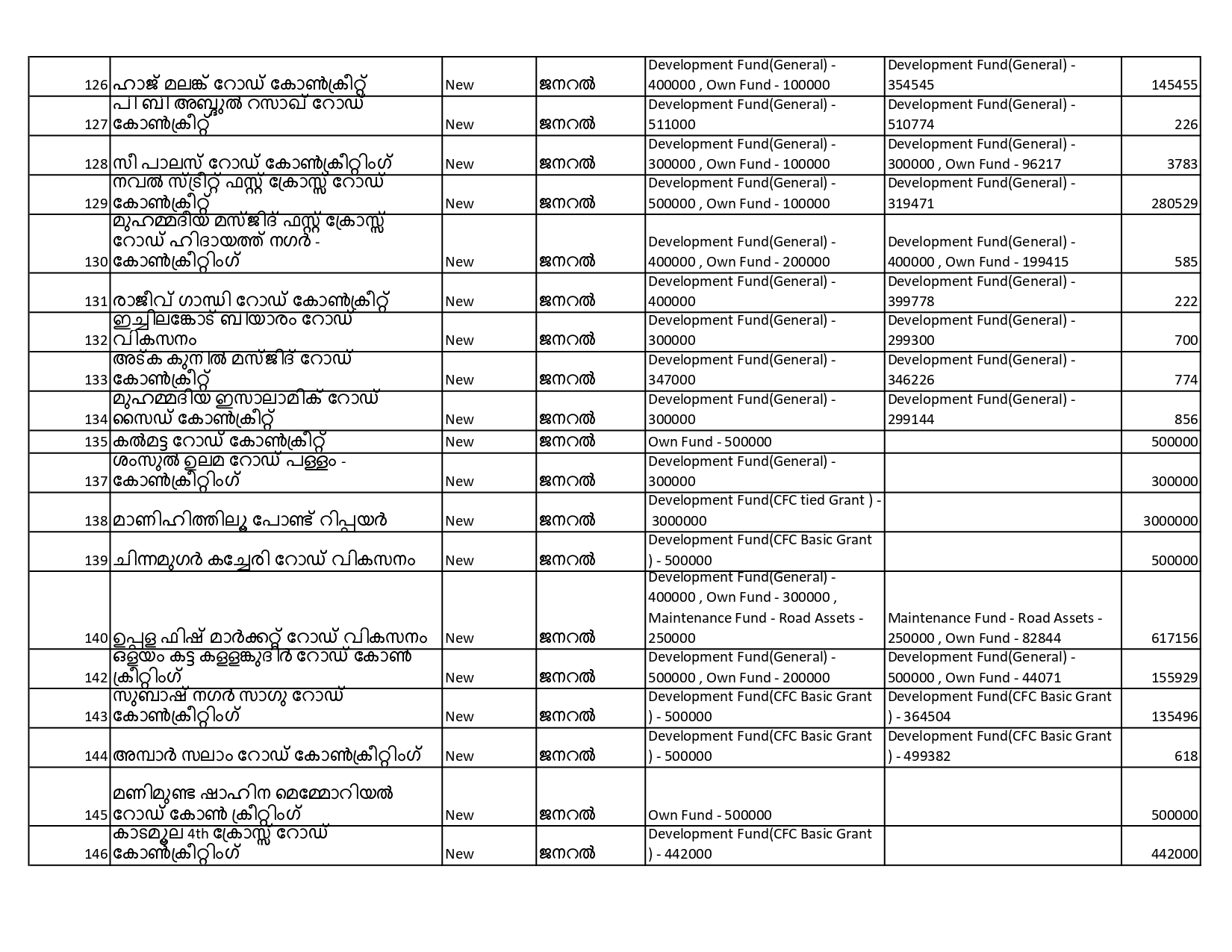
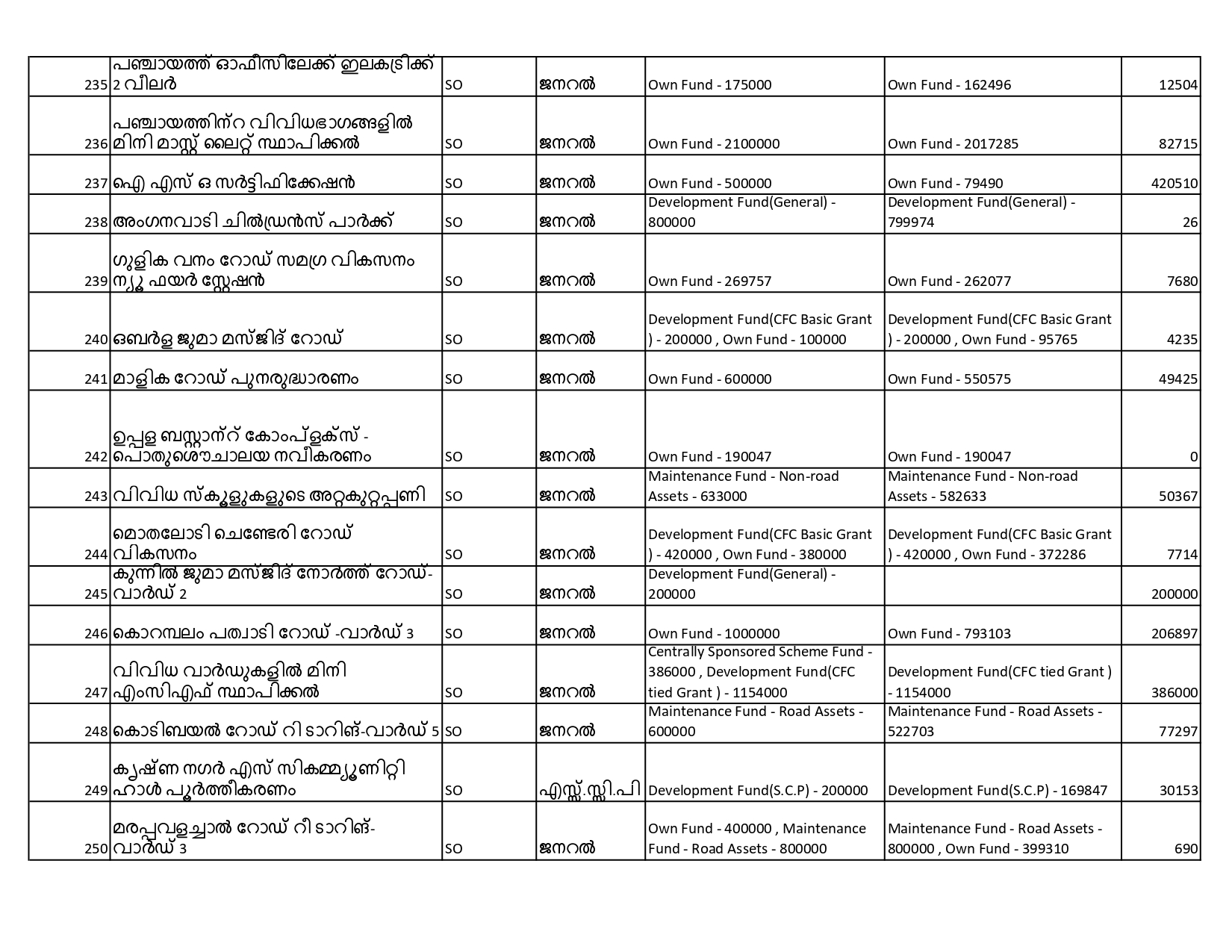
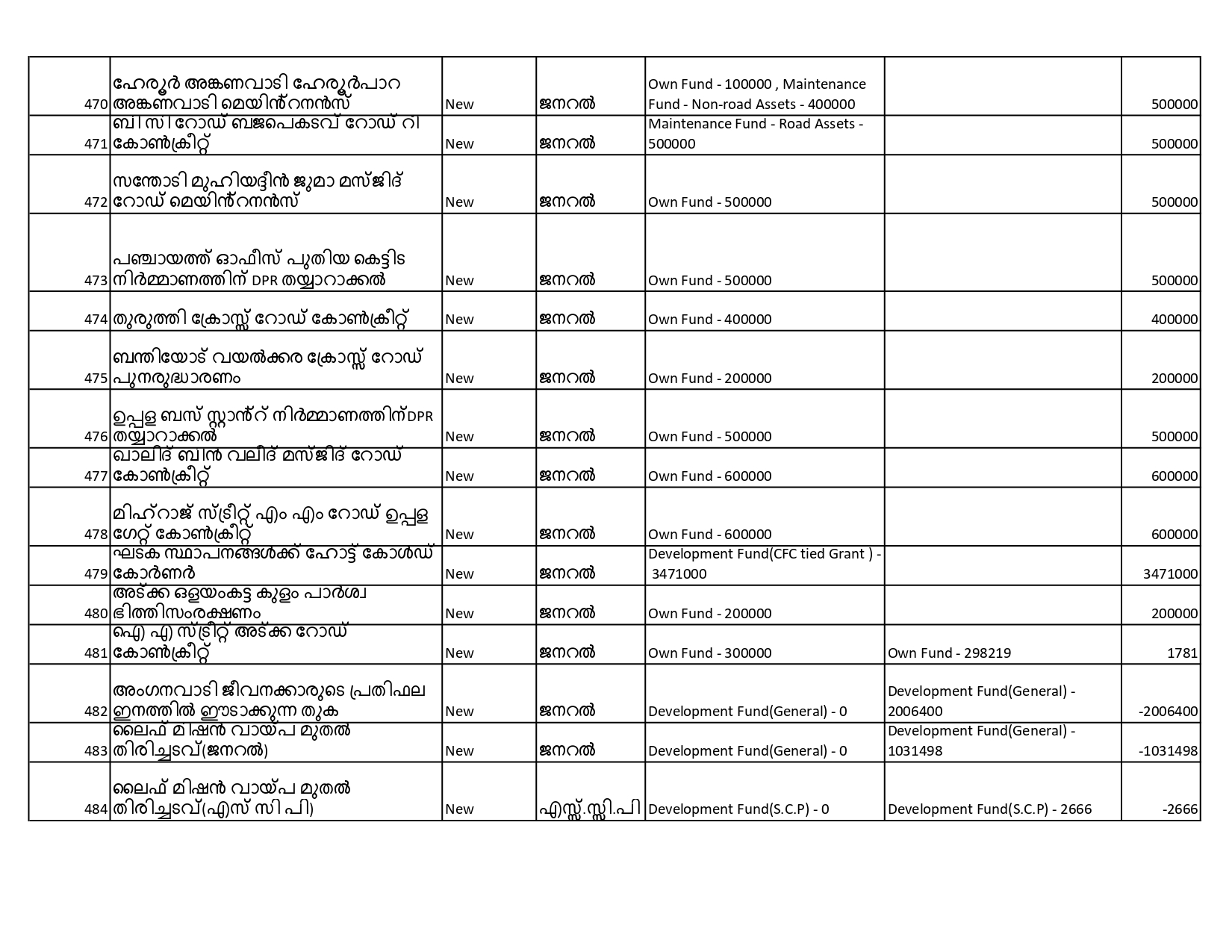
- Road Concreting Matrix: Extensive concrete paving projects were executed on vital bypasses such as Hidayath Road (Project 29), Firdaus Masjid Road (Project 43), Saklah Street (Project 44), and Cheroor Kaap Road (Project 52).
3. Financial Allocation Framework & Fund Sources
The underlying accounting matrix relies on a balanced distribution among five core financial pillars:
- Development Fund (General): Main asset building and multi-sectoral community welfare tracking.
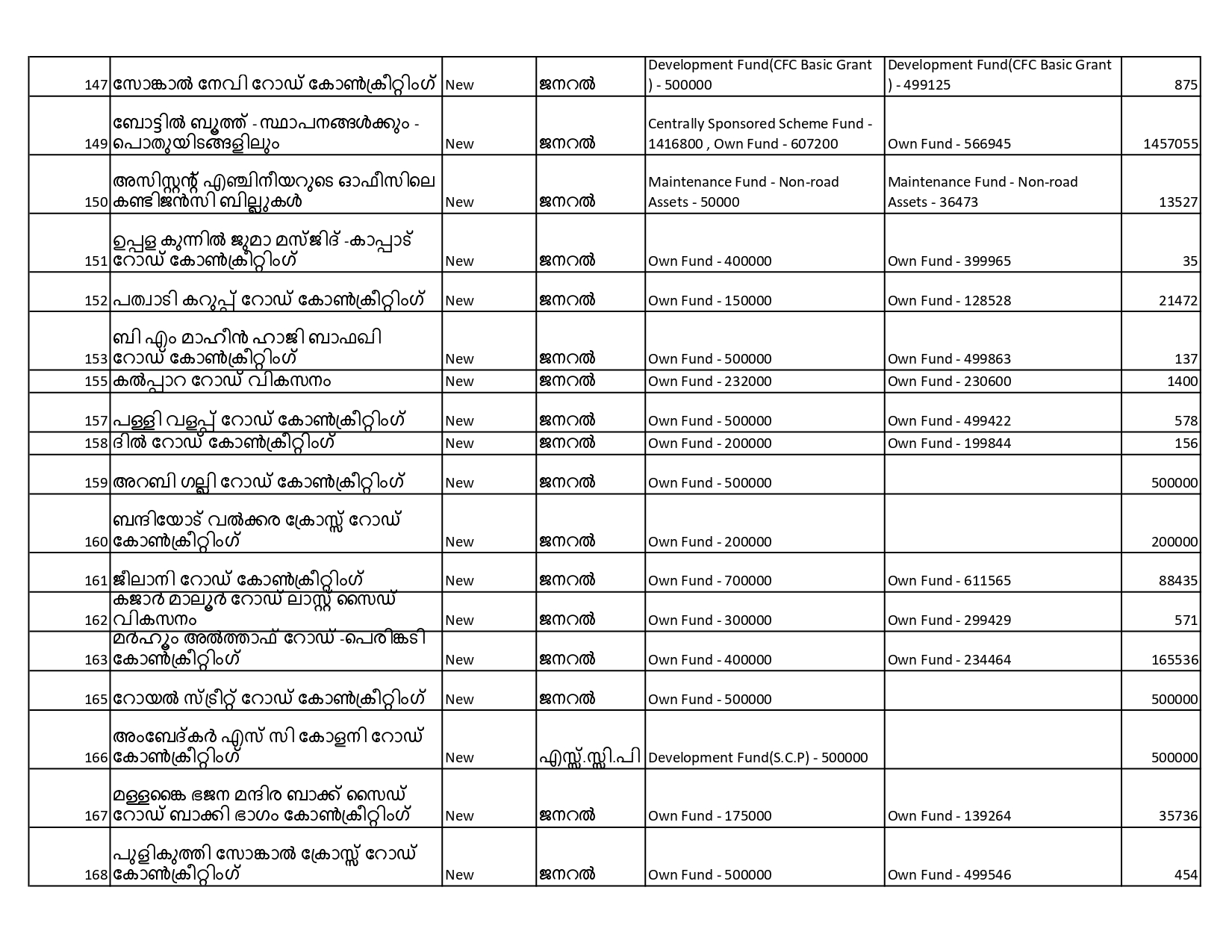
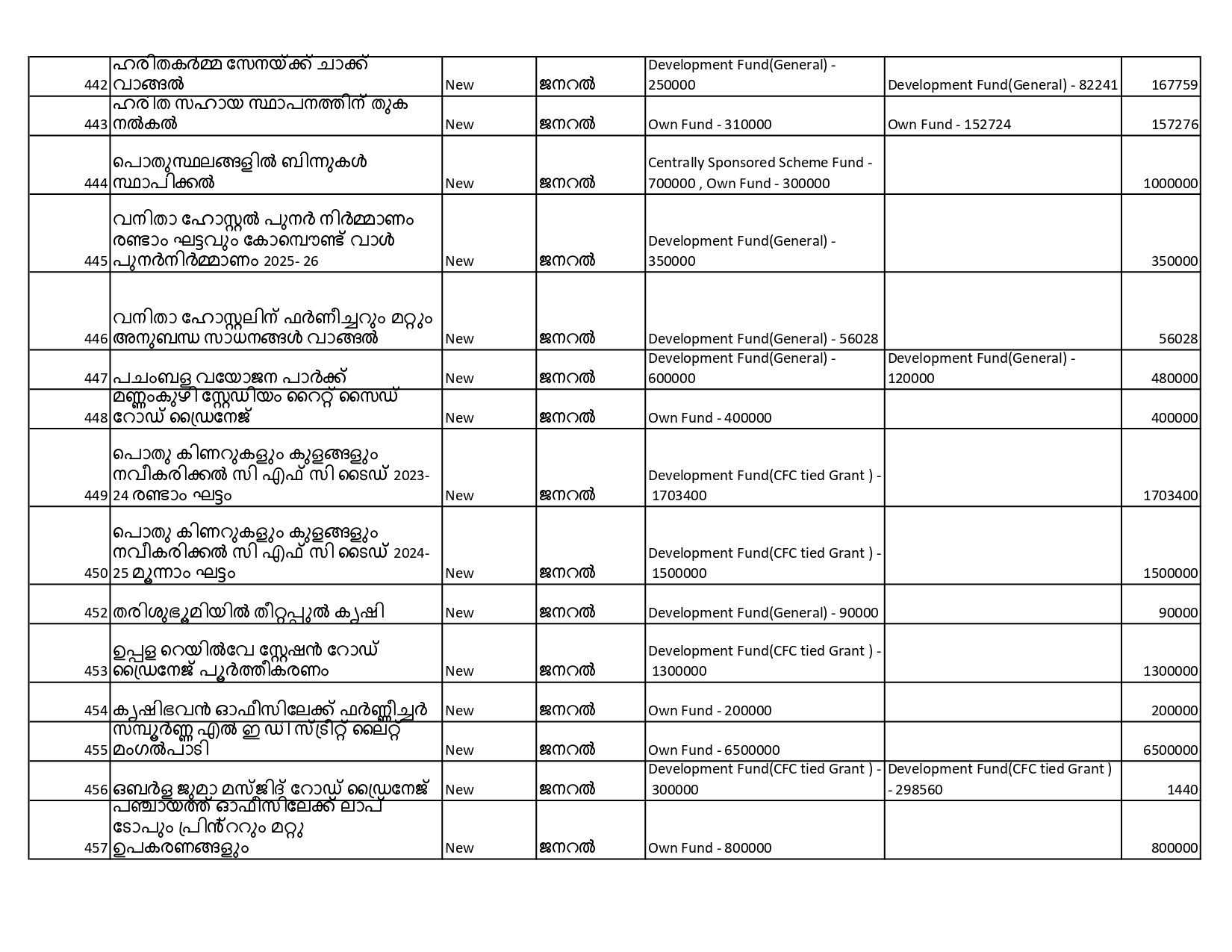
- Own Fund (Internal Revenue): Leveraged for urgent local maintenance, administrative overruns, cultural events (e.g., Keralotsavam), and community festivals.
- Maintenance Fund (Non-Road & Road Assets): Directed cleanly into restoring school buildings, public clinics, wall structures, and key paved assets.
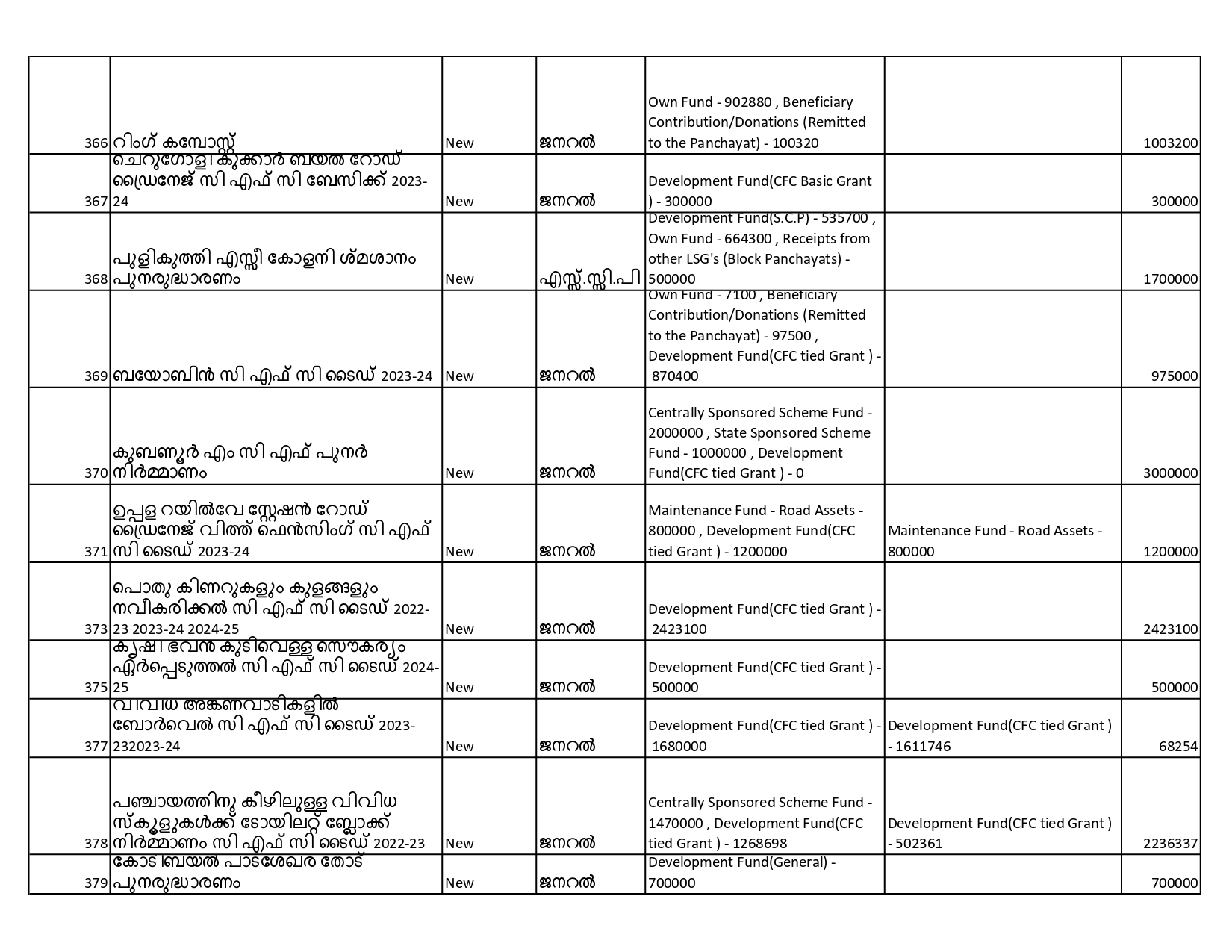
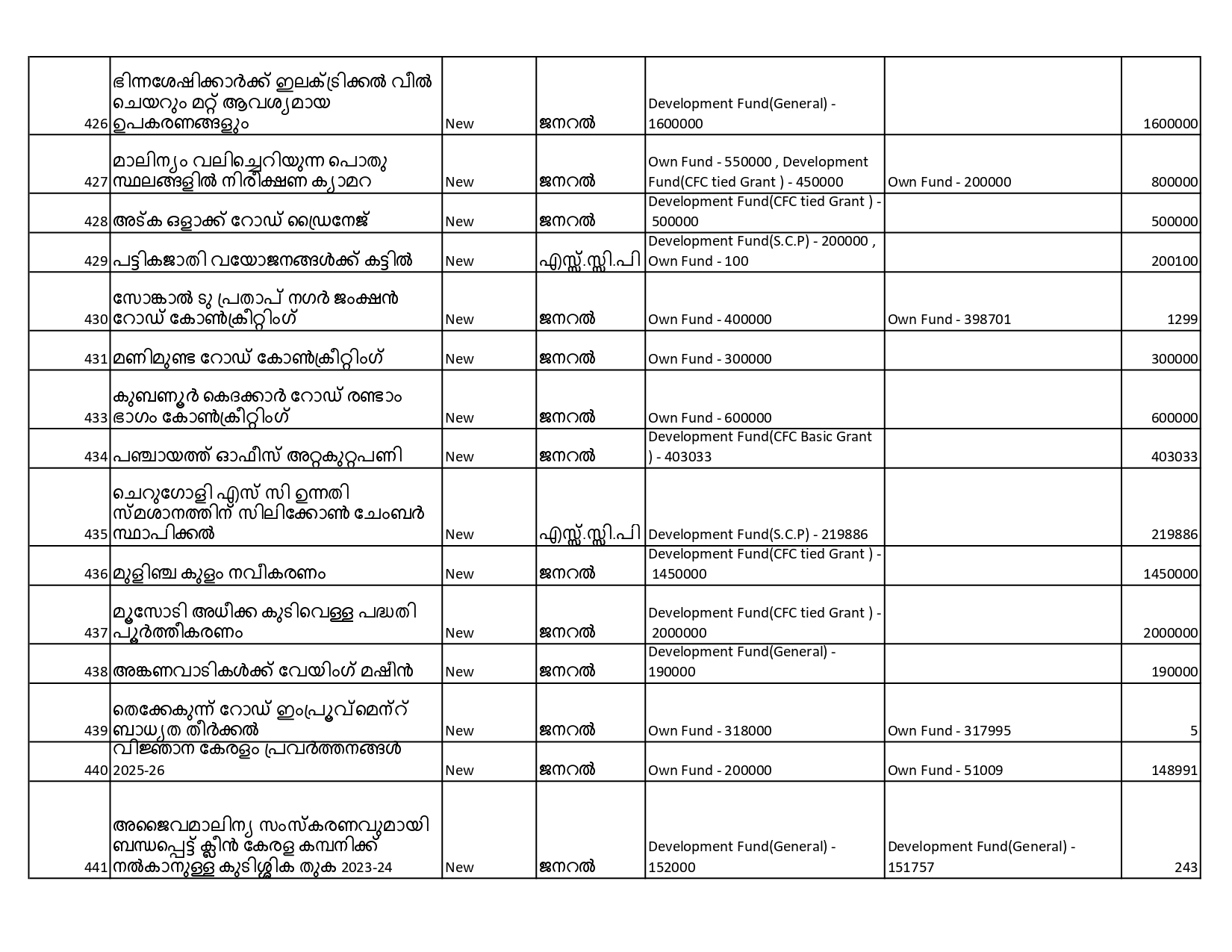
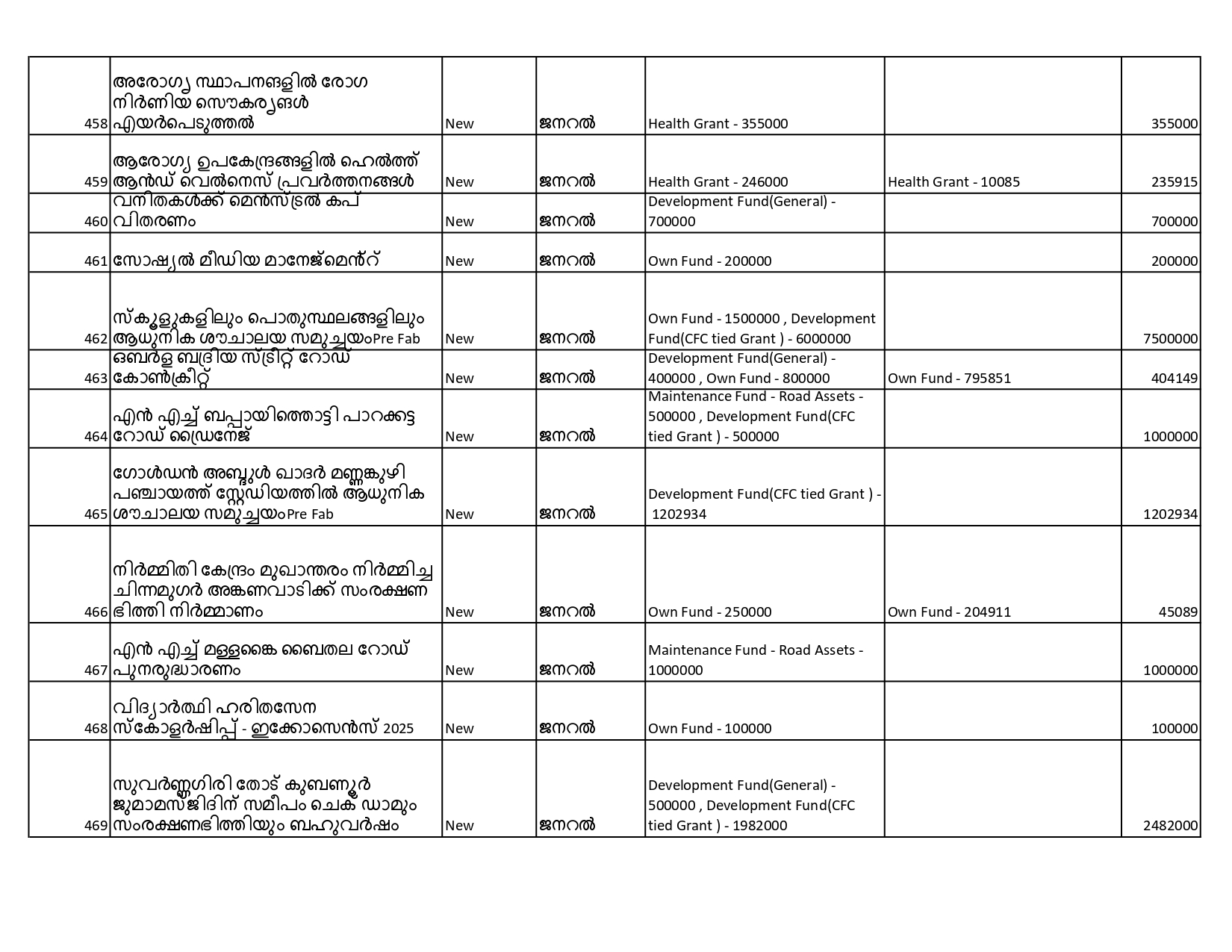
- CFC (Central Finance Commission) Tied/Basic Grants: Strict allocation partition where Tied Grants specifically went into water supply, check-dam repairs (such as Patwadi check-dam), and drainage connectivity. Basic Grants primarily financed public pathways and road works.
- Special Component Plan (SCP) & Tribal Sub Plan (TSP): Earmarked funds exclusively utilizing designated margins for Scheduled Caste and Scheduled Tribe welfare allocations (e.g., student furniture and laptop schemes).
4. Key Strategic Housing Frameworks: LIFE Mission
The LIFE Housing Scheme constitutes the largest single-focus welfare sector by fund quantum inside the ledger:
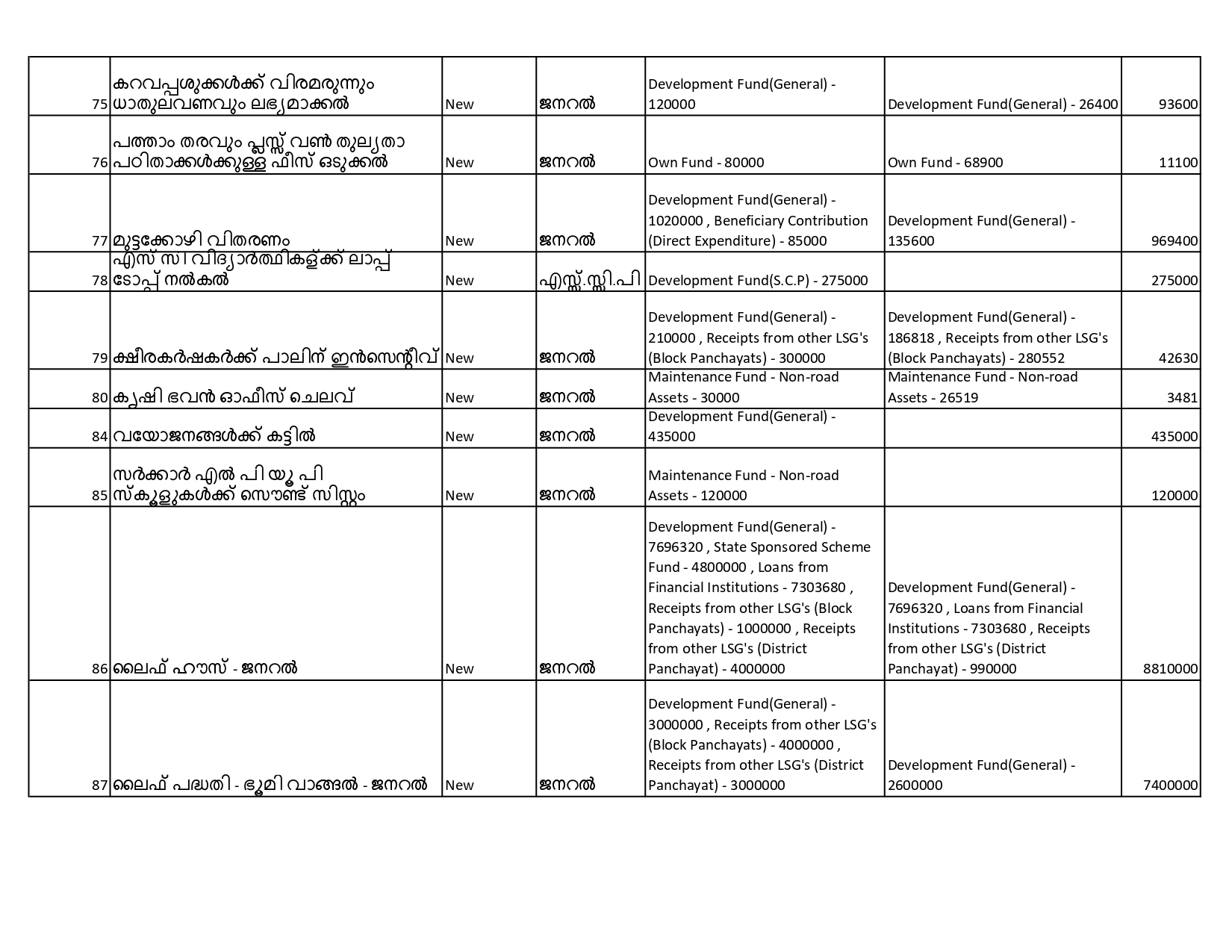
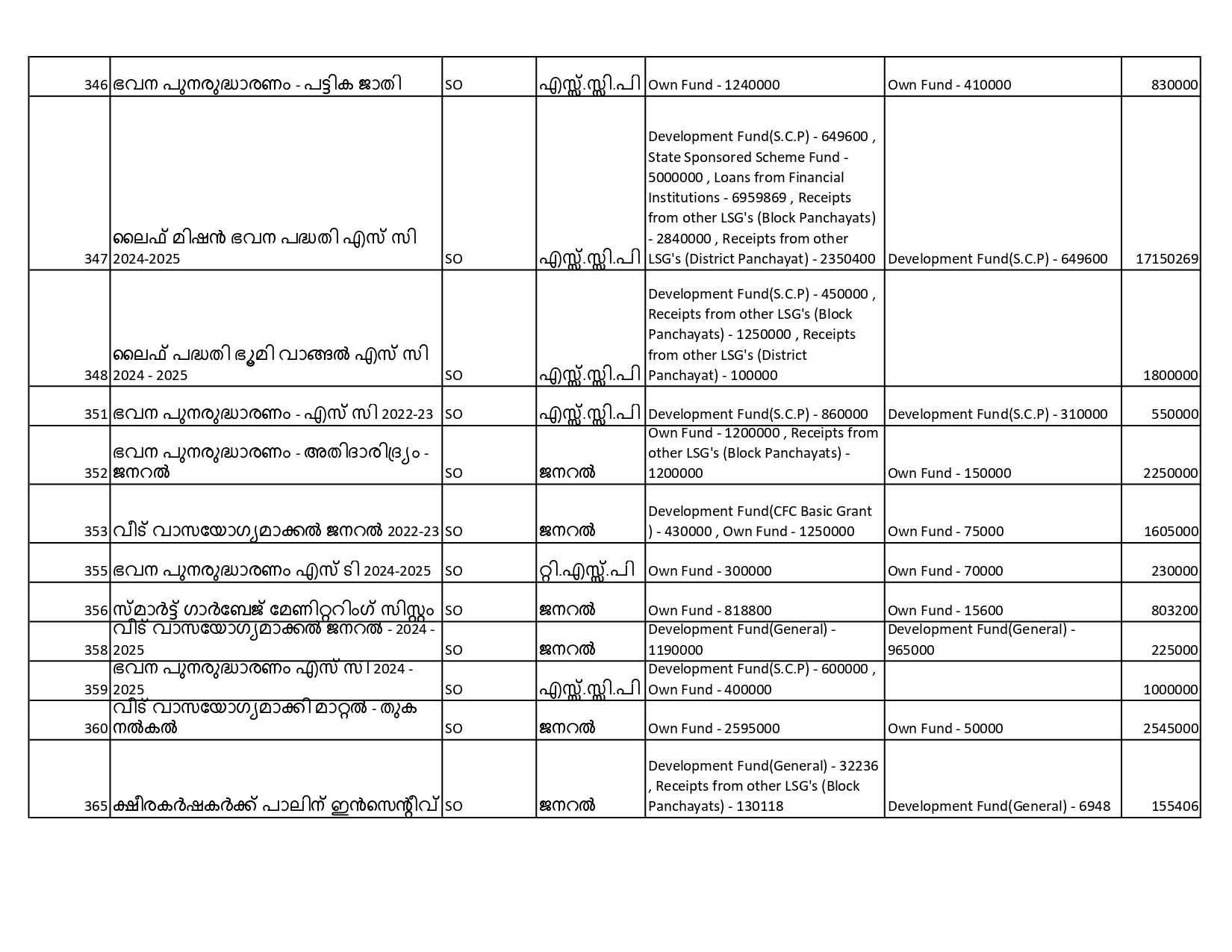
- LIFE General (Project 86): Put together a complex multi-tier funding layout pool utilizing ₹7,696,320 from the Development Fund, ₹4,800,000 from State Schemes, and ₹7,303,680 via Financial Institution Loans to execute comprehensive housing delivery.
- LIFE Land Acquisition (Project 87): Facilitated land-less citizens with an immediate localized development fund application matching ₹2,600,000 to construct future residential footprints.
- LIFE SCP (Project 88): Deployed a dedicated ₹3,000,000 from the Special Component Plan alongside external multi-level block and district institution shares to target housing security for weaker sections.
5. Summary Evaluation Conclusions
The implementation report establishes that the Mangalpady Grama Panchayat maintained high efficiency in standard road-concreting, legacy waste sanitation, and core medical setups. A few highly capital-intensive projects (such as solar plant installations for Anganwadis/Krishi Bhavan and large-scale check-dam restorations under Projects 116 & 138) show fully blocked allocations carrying balance reserves—signaling that these are transitioning as carryover infrastructural projects into the next rolling fiscal wave.